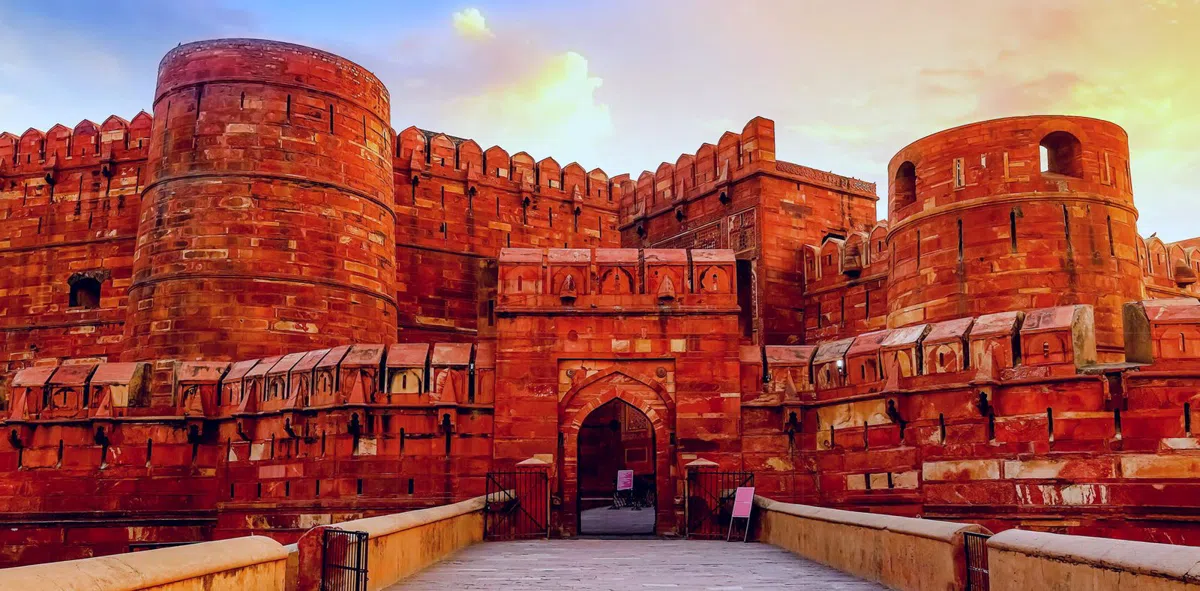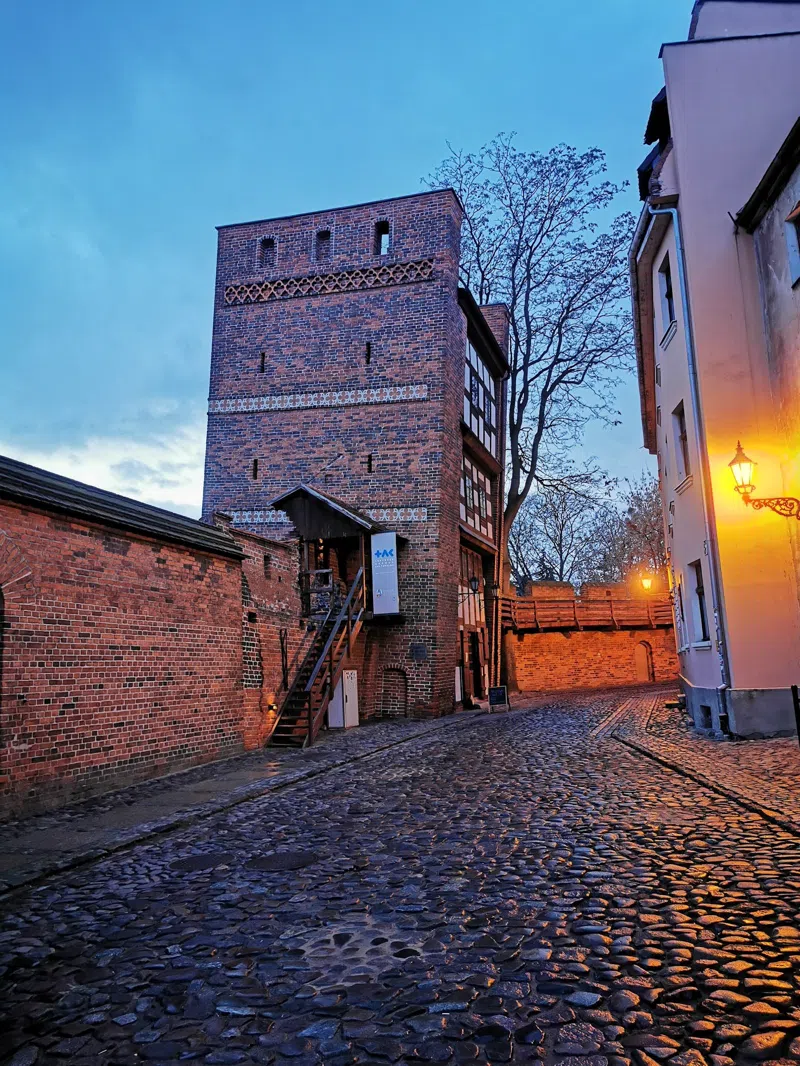

Nothing in the Old City sits closer to the front door than this. Step through Jaffa Gate and the citadel is immediately on your right: a Crusader-era shell on Herodian foundations, a minaret on top, a dry moat you can walk down into. Most people glance at the stonework, decide it is scenery, and press on into the souq. The ones who go in come out with the whole city arranged in their heads, which is worth more than any single sight you will see afterwards.
What the citadel actually holds
Tower of David Jerusalem Museum (Jaffa Gate, Old City), formally the Museum of the History of Jerusalem, reopened in 2023 after a renewal costing around 50 million dollars, and the result is ten galleries running the city's story in sequence. Before you buy a ticket, know that the galleries are threaded through the citadel itself. This is not a corridor of glass cases. You cross a courtyard, duck into a vaulted chamber, come out onto a rampart in full sun, go down again. The building is as much the exhibit as anything inside it, and the sequence does real work: by the fourth or fifth room, the layering of this city (rebuilt, besieged, renamed, rebuilt again) stops being an abstraction.
Below the display rooms is the archaeology. The citadel courtyard has been excavated repeatedly, and you walk past the layers rather than over them. The moat on the eastern side is open and worth the detour down; it is the clearest single place to read how many times this corner of the wall was torn down and raised. The Kishle, the long stone block on the southern flank, is the quietest part of the site and the part most often missed, because by then people have spent their attention upstairs.
Then there is the climb. Herod's Phasael Tower gives the highest 360-degree view inside the walls: rooftops and water tanks of the Christian and Armenian quarters, the Mount of Olives ridge, the Dome of the Rock gold sitting lower than you expect, and west into modern Jerusalem. Go up slowly and treat the view east as what it is, a working religious landscape where people are at prayer, not a backdrop. The stairs are stone, uneven in places, and there is no lift to the top.
The museum also runs a night show projected onto the citadel walls, ticketed separately at 69 NIS for an adult. It is a different proposition from the galleries, atmosphere rather than history, and it only makes sense if you are staying inside or near the walls and do not mind walking back after dark.
How long to allow
Two to three hours is the honest figure, and the upper end is not padding. An hour gets you a third of the galleries and a rushed courtyard; ninety minutes gets you the galleries without the moat, the Kishle or the tower. If you want the climb, which is the single best thing here, build in three.
Galleries first, while you are fresh and the rooms are cool. Courtyard and moat next. Then the tower last, so the view lands on a city you have just had explained to you. Doing the tower first is a common mistake; you get a handsome panorama you cannot read yet.
Best time to go
Early is better for every reason. The galleries are indoors and air-conditioned, so heat is not the issue it is elsewhere in the Old City, but the citadel's open sections (courtyard, ramparts, the top of the tower) are fully exposed, and between roughly 11:00 and 15:00 in summer that is a punishing place to stand still. An opening-time arrival gets you the outdoor half in shade and the climb before the stone starts radiating.
The opening hours are where plans go wrong, so take them seriously. Sunday does not open until noon. Friday and Saturday close at 15:00, which sounds generous until you work backwards: a 13:00 arrival on a Friday is not a visit, it is a lap. Midweek mornings, Monday through Thursday, are the uncomplicated choice, and they are also when most guided Old City walking itineraries operate, so the courtyard has more groups in it before about 11:00.
Seasonally, spring and late autumn are the obvious windows: walkable temperatures, clear long views from the tower. High summer is doable if you are disciplined about mornings. The major Jewish and Christian festival weeks fill the Old City generally and lengthen every queue in it, the citadel included.
Tickets at the door or booked ahead
For individuals and couples, the door is fine. An adult day ticket is 55 NIS, students 44, children aged 5 to 18 pay 35, and seniors and visitors with disabilities 28. A day ticket combined with the night show runs around 108 NIS. There is no sell-out drama to manage here. The thing that stops people getting in is the hours, not the capacity.
Groups work differently, and the museum handles them properly rather than grudgingly. Parties of 20 or more get a 40 NIS adult rate, plus a 500 NIS guiding fee for up to two hours with an in-house guide, and every tour has to be booked in advance through the reservation centre on *2884. In-house guiding is the best-value add-on at the site: these guides know which chamber the light is good in and which gallery to cut when your group is flagging.
If you would rather fold the citadel into a full private day across the Old City, that option exists and is worth understanding before you compare it to a 55 NIS entry. A full-day private guided Old City itinerary starts from 870 USD and runs five days a week, Sunday through Thursday. The operator confirms it manually, so allow up to 48 hours; it cannot be arranged last-minute. That is a lot of money, and what it buys is a guide who gets you across the quarters without the three wrong turns everyone makes, and who can read a doorway you would otherwise photograph and forget. It stands in for a day of your own navigation, not for the galleries.
Access, dress and the rules that matter
The citadel is a medieval fortress, and parts of it cannot be made flat. The galleries and main courtyard route are largely manageable, but the ramparts, the moat descent and Phasael Tower involve stone stairs, low headroom and uneven footing. If anyone in your party is unsteady, plan for them to enjoy the galleries and the courtyard and let the rest of you climb.
There is no dress code for the museum itself, since it is a museum. The moment you leave it, that changes, and it is worth being dressed for the day you actually have rather than changing halfway through.
What to pair it with inside the walls
The Ramparts Walk (Jaffa Gate, Old City) is the natural companion, and it is a separate operator with a separate ticket: around 25 NIS adult, 15 NIS for children, students and seniors, usually valid two days. Both routes start at Jaffa Gate; the northern leg runs about 90 minutes to Lions' Gate. It is single-file in places and strictly one-way, so small parties are fine and coach groups bottleneck badly at the stair access. It closes Saturdays and by 14:00 on Fridays, which means the Friday-afternoon version of this plan does not exist.
If the citadel leaves you wanting the Herodian layer itself rather than an account of it, walk to the Jerusalem Archaeological Park – Davidson Center (Jewish Quarter, beside the Western Wall plaza). It reopened in 2023 with new interactive galleries: 30 NIS adult, 16 NIS for children, students, seniors and soldiers, 21 NIS for groups over 25, with guided tours bookable in advance at 160 NIS. Closed Saturdays and Jewish holidays.
Five minutes from the citadel through the Armenian Quarter is the Helen and Edward Mardigian Armenian Museum of Jerusalem (Armenian Quarter), the least-visited serious museum inside the walls, reopened in 2022 after nearly thirty years shut. Entrance is a modest few tens of shekels. It is a quiet monastery setting, open Tuesday to Saturday 09:00-16:00 and closed Sunday and Monday; call 02 632 8807 if you are more than a handful of people.
The Church of the Holy Sepulchre (Christian Quarter) is eight minutes on foot from Jaffa Gate and the one place nearby where queueing genuinely bites. The line at the Edicule starts building around 09:00 and can run 45 to 60 minutes at midday, on Sundays and during Holy Week. Entry is free. Six denominations share the building and it is a working church: shoulders and knees covered, voices down, and keep moving during services, because people are praying in there. Pairing it with an early citadel slot is the standard solution, though the honest version is that one of the two will be busier than you want.
For a view from the other direction, the Lutheran Church of the Redeemer bell tower (Muristan, Christian Quarter) costs about 15 NIS and is the cheapest high vantage in the Old City. From here you look back at the citadel instead of out from it, which is a better photograph than anything Phasael gives you. The spiral stair is single-file with two rest landings; send people up in pairs, and note it closes Sundays for worship.
Ten minutes east, the Hurva Synagogue (Jewish Quarter) is worth it for the rebuilding story, with expectations managed: it is a functioning synagogue first, tourist access is limited to the women's gallery and the roof, and it closes Fridays. Looking in between services is free. The official Jewish Quarter guided visits want a minimum of roughly 20 people, must be reserved, and are priced per group, so budget a few hundred shekels for a party.
Where to regroup, eat and drink
Christ Church Jerusalem (Jaffa Gate) is literally across the road from the citadel entrance and the most useful bolt-hole in the area: a quiet garden, free 19th-century heritage displays with free tours, decent coffee and cake at 20-40 NIS, clean toilets, and a courtyard that can absorb a coach group without anyone noticing.
For the cheapest orientation in the quarter, the Petra Hotel & Hostel roof terrace (Jaffa Gate) charges non-guests about 5 NIS at reception for a panorama that makes the citadel's galleries make sense. It is rough around the edges, which is the point, and informal rather than group-friendly. A deliberate walk up Via Dolorosa gets you the Austrian Hospice roof terrace and Café Triest (Muslim Quarter), 5 NIS for roof access, strudel and coffee 30-50 NIS, kitchen until 21:00 and café until 22:00. It is the one Old City rooftop open that late and a genuine rival to the tower view for the price of a coffee; the roof itself is a modest footprint, so split a big party.
Eating near the gate: Versavee Restaurant, Bar & Café (Jaffa Gate) is the closest proper sit-down meal with alcohol, roughly 11:00-21:00 Monday to Saturday, mains 70-130 NIS, indoor vaults and outdoor tables, book ahead for anything sizeable. It is shut Sundays, which is awkward precisely because Sunday is the day the museum opens at noon and you are looking for somewhere to land afterwards. Lina Restaurant (Christian Quarter) is a sixty-year-old family hummusiya five minutes away, 25-40 NIS a head, open Saturdays when much of West Jerusalem is not, and closing around 17:00, so treat it as a lunch plan. It has a handful of tables; groups eat in shifts or take it away.
To end the day on a view, Notre Dame Rooftop Restaurant (outside New Gate) does over 40 imported cheeses and a long wine list with the walls lit behind you, and a cheese-and-wine spread for two runs roughly 250-400 NIS. It is a sit-down restaurant, not a drop-in bar, and it is not large, so reserve. The Rooftop at Mamilla Hotel (Mamilla) is the polished alternative: Sunday to Thursday 18:00-23:00, Friday and Saturday 13:00-21:00, mains 120-220 NIS, cocktails 60-80 NIS, with the Mirror Bar downstairs for later drinks and a short walk back through Jaffa Gate.
Either side of a visit, Teddy Park (below Jaffa Gate) is free, open and the ideal holding area if you are waiting on a tour start: the fountain runs to music every half hour and does a light show in the evening, directly beneath the walls. Alrov Mamilla Avenue (Mamilla) is the hinge between the citadel and the modern city, with around 140 shops and restaurants, roughly 09:30-22:00 Sunday to Thursday, closing about 14:00 on Friday, which matters because the Old City largely shuts for Shabbat too.
Is it worth it
Yes, and it is worth doing first. The citadel does not hold the city's greatest objects, and that is not why you go. It is the only place inside the walls that explains the whole city in one sitting, inside a building that has been through all of it. Spend 55 NIS and three hours here on day one and every church, excavation and rooftop afterwards costs you less effort to understand.
It suits first-time visitors above everyone else, and it suits anyone travelling with teenagers, who get a route with stairs and views rather than a reading exercise. Couples can do it entirely at the door with no planning. Returning visitors who already know the chronology may find the galleries familiar and should come anyway for the moat, the Kishle and the tower. Groups of 20 or more get the best deal in the Old City with the in-house guide. The people who will not enjoy it are those who want untouched archaeology with no interpretation, and they should spend their morning at the Davidson Center instead.
Practical notes
Getting there. No cars inside the Old City. The light rail to the City Hall or Jaffa Centre stops leaves you a ten-minute walk down through Mamilla Avenue to Jaffa Gate, which is also the most pleasant approach. Taxis drop at the Jaffa Gate taxi rank; the citadel is 30 seconds inside the gate on your right. For where to base yourself, start with a Jerusalem hotel search. Staying inside or immediately outside the walls is what makes the early-morning and after-dark plans possible.
Cash. Prices are in new Israeli shekels. Cards work at the museum, Mamilla and the restaurants, but carry small notes and coins: the 5 NIS rooftop fees, Lina, and the bell tower are all easier with cash.
Timing in one line. Museum opens at noon on Sunday and closes at 15:00 Friday and Saturday. Ramparts Walk is shut Saturday and closes at 14:00 Friday. The Davidson Center is shut Saturday and Jewish holidays. The Armenian Museum is closed Sunday and Monday. The bell tower is closed Sunday. Hurva closes Friday. Versavee is shut Sunday. Monday to Thursday mornings avoid every one of those traps.
Budget. A full self-guided day inside the walls (citadel at 55 NIS, Ramparts Walk at 25, bell tower at 15, a rooftop coffee with the 5 NIS access fee, and hummus for lunch) lands around 140-160 NIS a head, with the Holy Sepulchre and Teddy Park free. Add the night show combo at roughly 108 NIS if you want the evening too. A private full-day guided Old City itinerary with the citadel in it is a different order of spend, from 870 USD, confirmed manually with up to 48 hours' notice and running Sunday through Thursday, so decide on that before you travel rather than on the morning. More planning across the city sits in our wider Jerusalem guide.